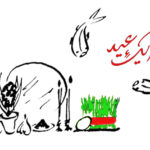
Stewart says: Ink painting on mulberry paper done last night as a demo for my painting students and, of course, in celebration of No Ruz. Eid-e shoma mobarak!
Stewart says: Ink painting on mulberry paper done last night as a demo for my painting students and, of course, in celebration of No Ruz. Eid-e shoma mobarak!
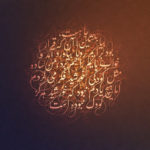
The Sun Was Never A Child by *farzaddesign
featuring a poem by Iranian poet Sirous Jamali
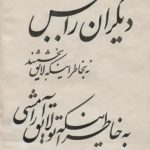
words to live by.
(Forgive others, not because they deserve forgiveness, but because you deserve peace.)
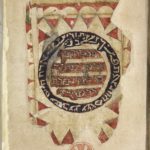
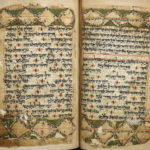
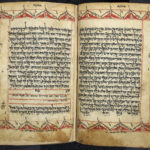

Illuminated Manuscript Of The Pentateuch (Torah), Persia, 1483 CE
Today for something different: Hebrew manuscript from Persia, now in the collection of the British Museum. | original link

This rondel features original calligraphy and translation into Persian (Farsi) by Stewart J. Thomas of the Buddhist prayer:
May I be free from fear. May I be free from suffering.
May I be happy. May I be filled with loving kindness.
The first phrase begins at the position of about 1 if this were a clock.
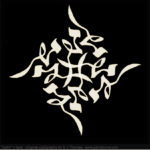
Original calligraphy design by Stewart J. Thomas: the design is made up of repeating elements of the word “mehr” meaning love in Persian (Farsi).
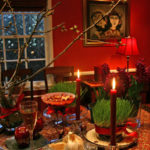
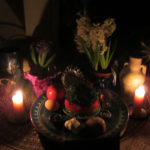
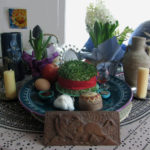
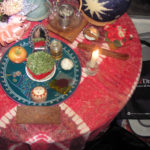
Another example of a No Ruz haft sin table, this one reblogged from another collection. Happy New Year!

“The sons of Adam are limbs of each other, Having been created of one essence.When the calamity of time affects one limbThe other limbs cannot remain at rest.If you have no sympathy for the troubles of others,You are unworthy to be called Human.”
Sa’adi Shirazi – Poet 13th Century
I found this piece of my own calligraphy posted on another blog. So, I thought I best reblog it here on my own Tumblr. This is the famous poem of Sa’adi that is engraved on the walls of the United Nations in New York. More of my work can be seen at palmstone.com … Stewart J. Thomas, calligrapher
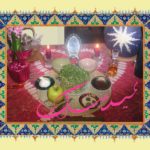
As we approach the celebration of No Ruz, the Iranian New Year which begins at the Vernal Equinox (usually March 21st in the Gregorian calendar), I am presenting a series of photos of the “Haft Sin” from previous years. This one is set within a hand painted border by Stewart J. Thomas with calligraphy reading “Eid Mobarak”
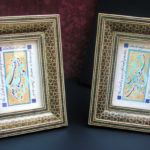
“The Lord is merciful and gracious, slow to anger, and plenteous in mercy” written by calligrapher Stewart J. Thomas, in English around the border of each piece, and in half lines within each frame in Persian (Farsi). Background and edges are hand painted with gouache and metallic inks overlaid with a watercolour wash. The frames are khatamkar, an Iranian craft wherein bundles of different colours of wood and metal are sliced and painstakingly inlaid into intricate geometric patterns.
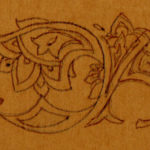
Sketch for border design scrollwork incorporating stylized floral motifs. Original design by artist and calligrapher Stewart J. Thomas.
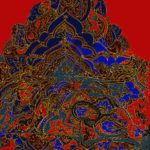
Another original design by Stewart J. Thomas. “I create these types of designs constantly, either in conjunction with calligraphy work–as borders or backgrounds–or as stand alone designs.” The embedded paisley designs, known as “boteh” in Persian, or “buta” in Kashmir, are a recurring motif in the arts of Iran and India.
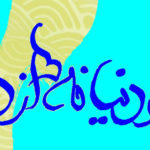
A modern and loose rendition of the kufic style of Arabic calligraphy, this phrase renders “In this world, not of this world” in Persian (Farsi): “Andar donya, nah as donya.”
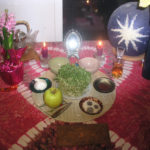
As we ponder the arrival of another No Ruz, or new day, I share with you a haft sin from a previous year. Note the use of the fish-shaped mirror – a small treasure from an auto rickshaw supply store in Bangalore, India – in lieu of a live goldfish. In a couple of weeks I’ll share this year’s haft sin photo with you.
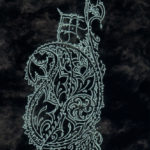
The pattern known in Persian as “boteh” or in Kashmir as “buta” is pervasive in Iranian designs since ancient times. From the 17th century the pattern became known in the west as the “Paisley” because of the connection between Kashmir designs that were then woven into wool shawls in Paisley, Scotland. Each year new designs were created in Kashmir, to this day a center of extremely complex weaving and embroidery skills. This pattern is by Stewart Thomas, who in addition to his calligraphy work creates several new “boteh” patterns every day.
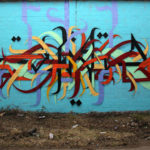
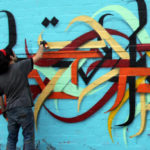
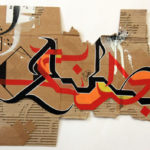
StreetArtNews on the Tabriz born artist’s brush with Iranian security forces.
A1one New Mural In Dusseldorf, Germany (The Story Of A1one)
One year ago, in March of 2012, A1one was kidnapped on the streets of Tehran, Iran by the civilian police from the “Intelligent Service of Islamic republic”. For nearly two weeks, he was kept in a hidden prison, blindfolded and lonely.Accusing him to receive money from Israel to promote graffiti and resistance against the Islamic Government of Ahmadinejad.
They also accused him to have received training in a military camp in Jordan, aiming to go back to Iran and promote graffiti and hip hop through his Underground Art media Studio.“None of this is true, I have never been in Jordan and never received money from Israel. Graffiti Was just my lifestyle and communication as a young artist ” —-A1oneNow, in March of 2013, the Iranian painter is free and painting in Germany. He is trying to forget this period of prison and mental torture which led him down yet another path of problems…A1one is mostly known for his innovative way of Arabic – Persian Calligraphy which has been influenced by the western “Wild Style” graffiti and tagging style.

Persian (Farsi) translation of “I am the fire that lives only in the rain.” Original Persian (Farsi) calligraphy by Stewart J. Thomas on marbled paper.
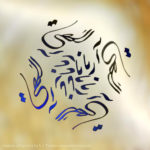
Calligraphic rondel by Stewart J. Thomas made up of the names Ariana and Illahi. Originally created as a tattoo design.

“Yeki bood, Yeki nabood” is the traditional beginning of Iranian stories: “Once there was, once there wasn’t … ” and so the tale begins. Persian (Farsi) calligraphy by Stewart Thomas.