Calligraphic rondel by Stewart J. Thomas designed as a tattoo incorporating the names Ariana and Ellahi.
Calligraphic rondel by Stewart J. Thomas designed as a tattoo incorporating the names Ariana and Ellahi.
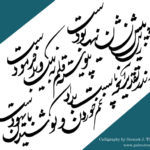
Lines of poetry from the Rubaiyat by Persian poet Omar Khayyam. Original calligraphy by Stewart J. Thomas.
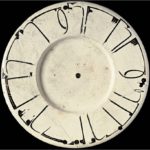
Ceramic plate from Nishapur, Iran, 10th century C.E. The border in Kufic style Arabic script can be translated as “Knowledge: the beginning of it is bitter to taste, but the end is sweeter than honey.”
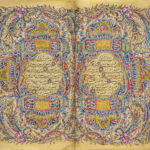
A beautiful double page spread from a calligraphed edition of the Quran. This is unusual in that the calligraphy is in the Persian nastaliq style and the decorations are free-flowing floral patterns. If anyone knows the provenance of this piece, let me know. Otherwise I am doing my own investigations. For my own work, see palmstone.com
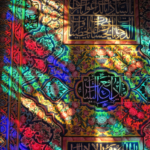
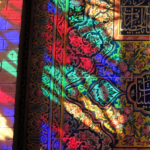
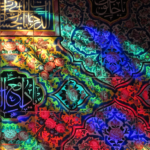
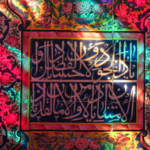
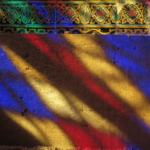
Masjed Nasir-al-Molk, Shiraz, Iran. The great strength of Iranian architecture is the use of light!

“Heech” literally meaning “nothing” in Persian can also be understood as the void, the space to be filled by creation and creativity. This work is in homage to Parviz Tanavoli. His work, which II saw regularly growing up in Tehran has been an enormous inspiration in my own artwork and understanding of calligraphy.
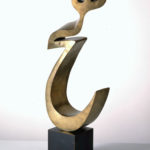
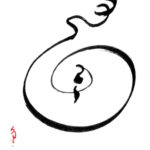
The work of Tanavoli has been enormously influential on my artwork and viewpoint, and a version of this sculptural work perhaps more than any other single work has informed my own understanding of calligraphy. I show here Tanavoli’s sculpture of “Heech” and my own humble homage to his work.
Many of his works are in the collection of the Grey Art Gallery at NYU. Their website says of this work:
In his sculpture entitled Heech, Tanavoli translates Persian calligraphy into three-dimensional form. Although the Persian word heech means “nothing,” the work is not meant to express despair or emptiness. Instead, for Tanavoli, the heech might represent creativity itself the void filled by the artist’s imagination.1 Tanavoli was a close friend and advisor to Abby Grey, who avidly collected his work. Her generous gift of modern Asian and Middle Eastern art works, along with an endowment, to New York University led to the founding of the Grey Art Gallery, which first opened its doors in 1975.
1. Paul Sloman, ed., Contemporary Art in the Middle East (London: Black Dog Publishing, 2009), 88.
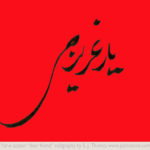
Yar-e-Azizam “My good friend” Persian calligraphy by Stewart J. Thomas.

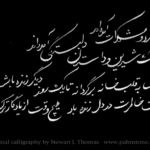
Mawlana Rumi wrote these two lines about the lover and the beloved. I am not aware of a translation into English. I shall undertake to translate it myself, but in the meanwhile if someone knows of a translation please let me know in the comments are in the contact section of my website palmstone.com. Original calligraphy by Stewart J. Thomas.
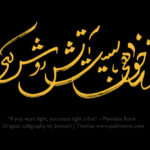
“If you want light, you must light a fire,” poetry by Mawlana Jalal ad-Din Muhammad Rumi, known by most simply as Rumi, the great poet who can be claimed by several modern nations, but who wrote in Persian (Farsi) in a manner that sounds as fresh, direct and poetic today as it must have when he first uttered the lines centuries ago. Original calligraphy by Stewart J. Thomas.
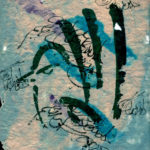
Silkscreen and calligraphy in ink on artist-made paper; original artwork by Stewart J. Thomas.
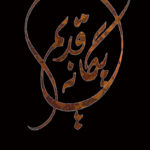
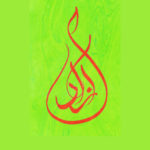
The Ancient One – “Yeganeh Ghadim” – an epithet of the divine. Original calligraphy by Stewart J. Thomas.

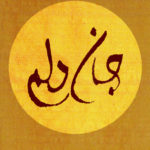
Persian (Farsi) calligraphy by Stewart J. Thomas, selection from the poem of Jalaludin Rumi, known in English as “Oh Soul, you worry too much”
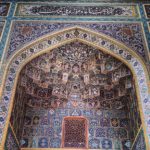
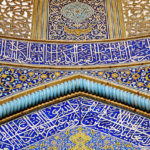
Library Entrance #Tehran #Iran (at Imam Khomeini Square / میدان امام خمینی)
National Library and Museum, Tehran

This rondel features original calligraphy and translation into Persian (Farsi) by Stewart J. Thomas of the Buddhist prayer:
May I be free from fear. May I be free from suffering.
May I be happy. May I be filled with loving kindness.
The first phrase begins at the position of about 1 if this were a clock.
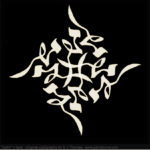
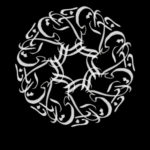
Original calligraphy design by Stewart J. Thomas: the design is made up of repeating elements of the word “mehr” meaning love in Persian (Farsi).
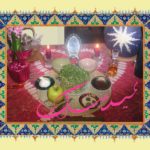
As we approach the celebration of No Ruz, the Iranian New Year which begins at the Vernal Equinox (usually March 21st in the Gregorian calendar), I am presenting a series of photos of the “Haft Sin” from previous years. This one is set within a hand painted border by Stewart J. Thomas with calligraphy reading “Eid Mobarak”
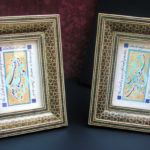
“The Lord is merciful and gracious, slow to anger, and plenteous in mercy” written by calligrapher Stewart J. Thomas, in English around the border of each piece, and in half lines within each frame in Persian (Farsi). Background and edges are hand painted with gouache and metallic inks overlaid with a watercolour wash. The frames are khatamkar, an Iranian craft wherein bundles of different colours of wood and metal are sliced and painstakingly inlaid into intricate geometric patterns.
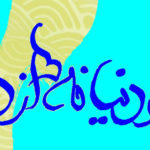
A modern and loose rendition of the kufic style of Arabic calligraphy, this phrase renders “In this world, not of this world” in Persian (Farsi): “Andar donya, nah as donya.”

Persian (Farsi) translation of “I am the fire that lives only in the rain.” Original Persian (Farsi) calligraphy by Stewart J. Thomas on marbled paper.

“Yeki bood, Yeki nabood” is the traditional beginning of Iranian stories: “Once there was, once there wasn’t … ” and so the tale begins. Persian (Farsi) calligraphy by Stewart Thomas.